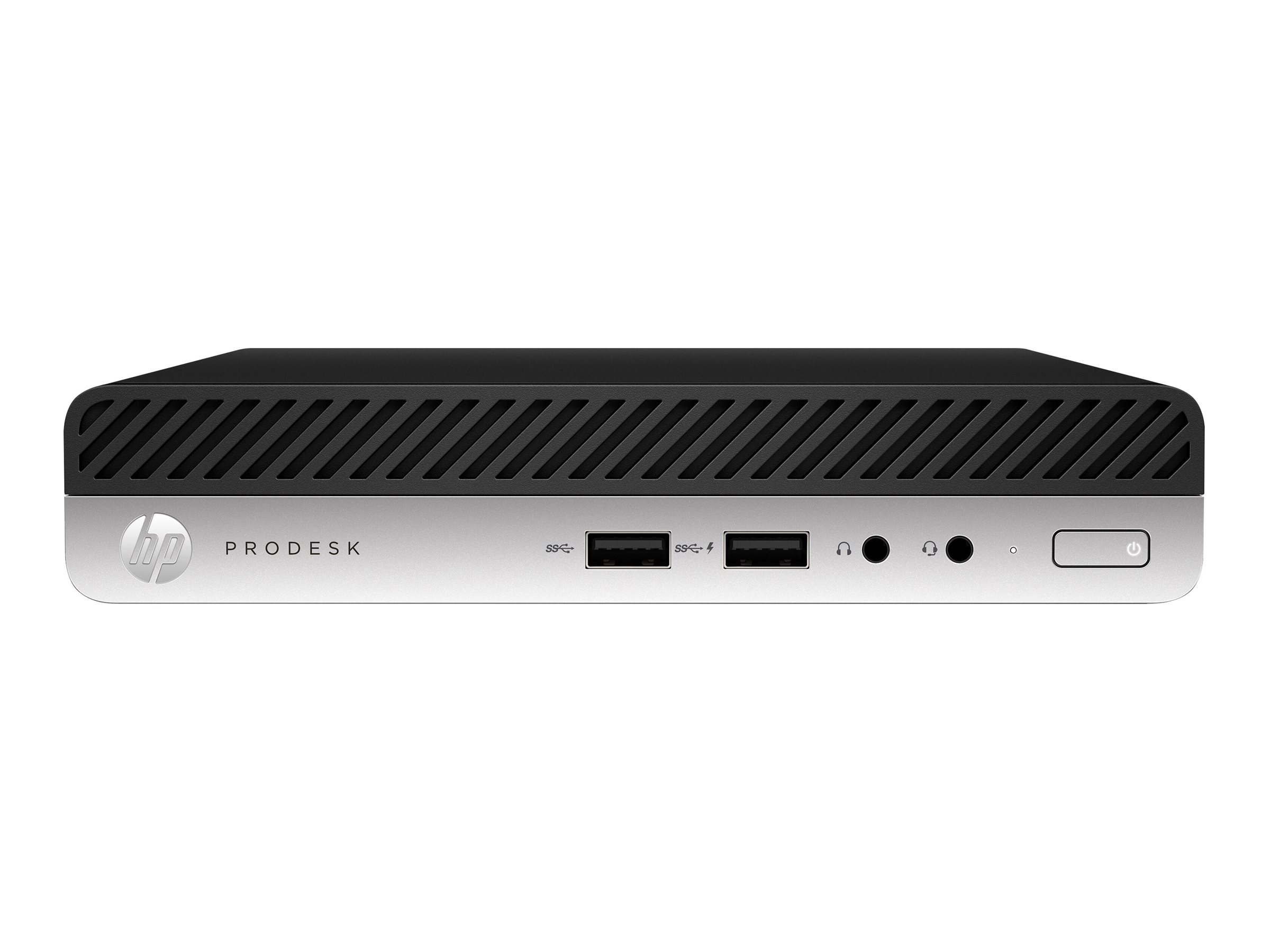
HP ProDesk 400 G5 Desktop Mini – Hardware Telemetry & Diagnostic Report
•
Target Host:
i3 (HP ProDesk 400 G5 Desktop Mini)•
Site: CZ-BRN-NEU (Brno Lab)
•
Verification Date: August 22, 2026 / September 20, 2026
1. System Summary & Computer Overview
| Category | Property | Value |
|---|---|---|
| Computer | Computer Type | ACPI x64-based Ultra-Compact Form Factor (UCFF) Desktop Mini PC |
| Hostname / Role | i3 (Standalone Proxmox VE Virtualization Node & Immich VM 102 Host) |
|
| System Vendor & Model | HP Inc. • HP ProDesk 400 G5 Desktop Mini (Family: 103C_53307F HP ProDesk) |
|
| Product SKU & Serial | Product ID: 8VR69ES#BCM (DMI: SBKPFV3) • Serial: 8CC0270RP8 |
|
| System UUID | a5d665b5-0be4-0303-77ef-fab9d5fd9981 |
|
| Motherboard | HP 859C (Mandolin-R • KBC 08.09.22 • Serial: PHVVA0A8JDUDXN) |
|
| Chassis Dimensions & Weight | 1-Liter Ultra-Slim Mini (17.7 × 17.5 × 3.4 cm • 1.25 kg net weight) | |
| Operating System | Primary Hypervisor | Proxmox VE 9.2.11 (pve-manager 9.2.11/f6997e698c7933ea) |
| Base OS & Kernel | Debian GNU/Linux 13 (trixie, x86_64) • Linux Kernel 7.0.14-12-pve |
|
| Dual-Boot Secondary OS | Windows 10 Pro 64-bit (contained on secondary protected SATA SSD) | |
| Boot Mode & Firmware | Native UEFI Mode with Secure Boot support | |
| Cluster Network Endpoints | LAN: 192.168.111.101/24 on vmbr0 • Tailscale: 100.83.60.31 (cz-brn-neu-proxmox-i3) |
|
| Processors | CPU Sockets | 1 × Socket LGA 1151 (LGA 1151v2) |
| Processor Model | Intel(R) Core(TM) i3-9100T CPU @ 3.10GHz (• Exhibit #2877) | |
| Core / Thread Count | 4 Physical Cores / 4 Threads (1 thread per core, non-SMT) | |
| Microarchitecture | Coffee Lake Refresh (14 nm++, Stepping B0, S-Spec SRCZX, 35W TDP) |
|
| PassMark Benchmark | 5,632 Multi-Thread Mark (Local System Run: 6,109 • Single-Thread: 2,116 MOps/Sec) | |
| Memory | Physical Installed RAM | 64.0 GB (2 × 32 GB Corsair Vengeance DDR4-3200 SODIMMs) |
| Module Specification | Corsair CMSX64GX4M2A3200C22 (Dual-Rank 2Rx8, non-ECC unbuffered, 1.2V) |
|
| Configured Operating Speed | 2400 MT/s (38.4 GB/s dual-channel bandwidth • B360 chipset limit) | |
| Runtime Usable Memory | 62.5 GiB binary (~67.0 GB decimal) Linux visible RAM + 8.0 GiB Swap | |
| Graphics | Integrated Graphics Processor | Intel® UHD Graphics 630 (Gen9.5 GT2, 24 EUs @ up to 1,100 MHz boost • i915) |
| Hardware Acceleration | Intel Quick Sync Video (Hardware HEVC 10-bit / VP9 encode & decode for Immich VM 102) | |
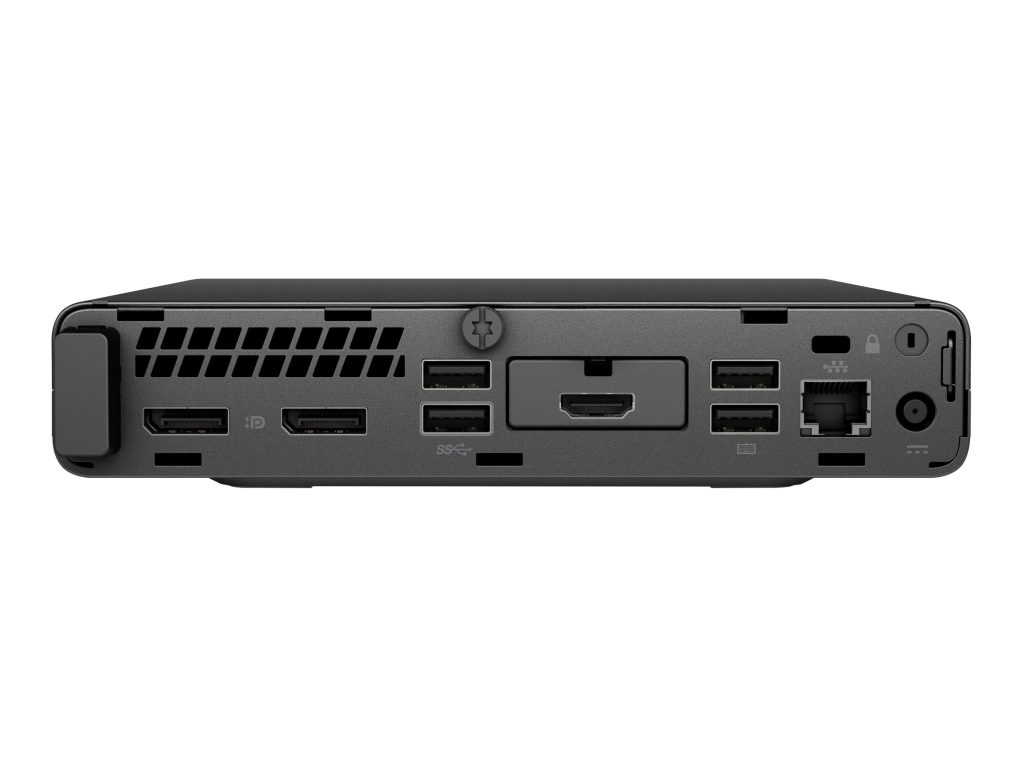
| Physical Display Connectors | 2 × DisplayPort 1.2 (4096 × 2304 @ 60Hz) + 1 × VGA port (2048 × 1536 @ 60Hz) | |
| Storage | Primary OS & VM Storage | Kingston OM8PJP4512K3-AH0 512 GB M.2 2280 NVMe 2.0 SSD (PCIe 3.0 x4) |
| Secondary Protected Disk | Verbatim Vi560 S3 SSD 512 GB 2.5″ SATA 3.0 SSD (Firmware: HP3418C5) |
|
| Storage Subsystem Health | SMART Passed on both drives • 0 media errors • 100% available NVMe spare | |
| Networking | Primary Wired Ethernet | Realtek RTL8111HSH Gigabit Network Connection (PCI 10ec:8168 rev 15 • 1 Gb/s Full-Duplex) |
| Wireless Interface | Intel Wireless-AC 9560 160MHz (802.11ac + Bluetooth 5.0, MAC: f8:ac:65:79:f5:18 • Standby) |
2. Motherboard & Chipset Architecture
Motherboard Properties
- Manufacturer: HP Inc.
- System Board Model: HP
859C(Mandolin-R Architecture) - Board Serial:
PHVVA0A8JDUDXN(KBC Firmware08.09.22) - Form Factor: Proprietary HP Ultra-Slim Desktop Mini (1-Liter UCFF)
- Chassis Engineering: Heavy-gauge galvanized steel frame with tool-free thumbscrew quick-release top cover and integrated cooling shroud.
BIOS & Firmware
- Vendor & Version: HP
R23 Ver. 02.26.00 - Release Date: May 5, 2026 (Modern Production Maintenance Release)
- Firmware Standards: UEFI 2.6, SMBIOS 3.2, ACPI 6.2, PXE 2.1 Boot
- Microcode Status: Intel Microcode Revision
3.20251111.1~deb13u1 - Hardware Features: HP Sure Start Gen5 BIOS protection, TPM 2.0 security chip, Intel VT-x and VT-d directed I/O virtualization.
Chipset & Bus Architecture
- Platform Controller Hub: Intel® B360 Express Chipset (Cannon Lake PCH, 22 nm, 6W TDP)
- Interconnect Fabric: Direct Media Interface (DMI 3.0) running 4 lanes at 8.00 GT/s (approx. 3.93 GB/s per direction) to CPU.
- Peripheral Connectivity: 4 × USB 3.1 Gen 1, 2 × USB 2.0, dual M.2 slots (1 × M.2 2280 PCIe NVMe + 1 × M.2 2230 Wi-Fi).
- Storage Interface: Intel Cannon Lake PCH AHCI controller operating internal 6 Gbps SATA 3.0 channel.
Power Delivery & Energy Efficiency
- Power Supply Unit: External HP 65W Smart AC Adapter (19.5V DC output, 3.33A)
- Efficiency Rating: Up to 89% energy efficiency at typical operational loads.
- Idle Power Consumption: Consumes approximately 8W – 11W in low-power idle hypervisor state.
- Acoustic Footprint: Whisper-quiet radial blower fan with closed-loop PID thermals operating below 22 dBA at baseline.
3. Processor Architecture (Intel Core i3-9100T)
| CPU Specification | Processor Socket #0 (Installed CPU) |
|---|---|
| Model Name | Intel(R) Core(TM) i3-9100T CPU @ 3.10GHz (• Exhibit #2877) |
| Architecture & Lithography | Coffee Lake Refresh (14 nm++ 3D Tri-Gate FinFET) |
| Socket & Stepping | Socket LGA 1151 (LGA 1151v2) / Stepping B0 (Family 6, Model 158, Stepping 11) |
| Production S-Spec Code | SRCZX (Verified Museum Physical Inventory • OEM Part: CM8068403377713) |
| Physical Cores / Threads | 4 Cores / 4 Threads (1 thread per core, non-SMT design) |
| Base & Turbo Frequencies | 3.10 GHz Base / 3.70 GHz Max Turbo (Intel Turbo Boost Technology 2.0) |
| BCLK Multiplier & Voltage | 100 MHz Base Clock × 31.0 (Locked Multiplier) • Dynamic VID 0.65V – 1.20V |
| Thermal Design Power (TDP) | 35 W (T-Series Ultra-Low Power Profile • 25W cTDP-down @ 2.40 GHz) |
| Hypervisor Virtualization | Intel VT-x with Extended Page Tables (EPT) • Intel VT-d (IOMMU translated mode with interrupt remapping) |
Cache Hierarchy
| Cache Level | Type | Per-Core Capacity | Total Aggregate | Associativity & Line Size |
|---|---|---|---|---|
| L1 Data | Data (L1d) | 32 KiB per core | 128 KiB (4 instances across 4 cores) | 8-way set associative, 64-byte line size |
| L1 Instruction | Instruction (L1i) | 32 KiB per core | 128 KiB (4 instances across 4 cores) | 8-way set associative, 64-byte line size |
| L2 Unified | Dedicated (L2) | 256 KiB per core | 1,024 KiB (1 MiB) | 4-way set associative, 64-byte line size |
| L3 Shared | Intel Smart Cache (L3) | Shared pool across 4 cores | 6,144 KiB (6 MiB) | 12-way set associative, non-inclusive ring cache |
Hardware Vulnerability & Mitigation Status
| Vulnerability | Kernel Status | Mitigation Details |
|---|---|---|
| Meltdown (CVE-2017-5754) | Mitigated | Kernel Page Table Isolation (KPTI) fully active in Linux 7.0.14-12-pve |
| Spectre v1 (CVE-2017-5753) | Mitigated | usercopy/swapgs barriers and __user pointer sanitization |
| Spectre v2 (CVE-2017-5715) | Mitigated | Retpolines, conditional Indirect Branch Prediction Barrier (IBPB), IBRS_FW, RSB filling |
| Speculative Store Bypass (v4) | Mitigated | Speculative Store Bypass Disable (SSBD) enforced via prctl |
| L1TF Foreshadow (CVE-2018-3615) | Mitigated | PTE Inversion, VMX L1D cache flushing on hypervisor entry |
| MDS (CVE-2019-11091) | Mitigated | Microcode buffer clearing (MD_CLEAR) active; SMT disabled (non-SMT CPU) |
| Gather Data Sampling (GDS) | Vulnerable | Published GDS vulnerability reported by kernel; monitored under ongoing patch review |
| Retbleed / SRBDS | Mitigated | Mitigated via microcode update 3.20251111.1~deb13u1 and kernel return thunks |
4. Memory (RAM) & Channel Subsystem
Total Physical Memory
64.0 GB
2 × 32 GB Corsair Vengeance DDR4 SODIMMs
Operating Speed & Mode
DDR4-2400
Dual-Channel Interleaved • 38.4 GB/s peak bandwidth
Slot Utilization
2 / 2 Filled
Fully populated dual SODIMM architecture (100% capacity)
Physical Channel Layout Map
+-----------------------------------------------------------------------------------------------+
|                         HP 859C SYSTEM BOARD (MANDOLIN-R) MEMORY TOPOLOGY                     |
|                                                                                               |
|  [ INTEL CORE i3-9100T INTEGRATED DUAL-CHANNEL DDR4 CONTROLLER ]                             |
|                                                                                               |
|   - Channel A:                                                                                |
|     * Slot DIMM 3 (Internal Lower Slot): [ 32 GB Corsair CMSX64GX4M2A3200C22 DDR4-2400 ]      |
|                                                                                               |
|   - Channel B:                                                                                |
|     * Slot DIMM 1 (Internal Upper Slot): [ 32 GB Corsair CMSX64GX4M2A3200C22 DDR4-2400 ]      |
|                                                                                               |
|   Total Usable System Physical Memory: 64.0 GB (62.5 GiB binary Linux Visible + 8.0 GiB Swap)  |
+-----------------------------------------------------------------------------------------------+
Physical DIMM Slot Inventory
| Slot Label | Channel | Installed Module Part | Capacity | Type & Rank | Rated / Configured Speed | Status |
|---|---|---|---|---|---|---|
DIMM 1 |
Channel B | Corsair CMSX64GX4M2A3200C22 |
32 GB | DDR4 SODIMM, Dual-Rank 2Rx8 | 3200 MT/s rated • 2400 MT/s active | Active / OK |
DIMM 3 |
Channel A | Corsair CMSX64GX4M2A3200C22 |
32 GB | DDR4 SODIMM, Dual-Rank 2Rx8 | 3200 MT/s rated • 2400 MT/s active | Active / OK |
5. Graphics & Display Adapters
Primary Accelerator: Intel® UHD Graphics 630
| GPU Architecture | Gen9.5 GT2 (14 nm++ monolithic integration) |
| Execution Units (EUs) | 24 Execution Units (192 Shading Units • 350 MHz base / 1,100 MHz dynamic max) |
| Video Memory (VRAM) | Shared System Memory (Dynamic Video Memory up to 64 GB allocated from system RAM) |
| Media Engines & Transcoding | Intel Quick Sync Video • Hardware decode/encode for H.264, H.265/HEVC (10-bit), VP9 |
| Driver Interface | i915 Direct Rendering Manager (DRM) kernel module with hardware acceleration enabled |
| Physical Display Outputs | 2 × DisplayPort 1.2 ports + 1 × VGA port (supports up to 3 independent displays) |
| Maximum Resolution | 4096 × 2304 @ 60Hz (DisplayPort) • 2048 × 1536 @ 60Hz (VGA) |
6. Storage Subsystem & Drive Inventory
+-------------------------------------------------------------------------------------------------------+
|                                    PHYSICAL DISK & STORAGE TOPOLOGY                                   |
|                                                                                                       |
|  [ M.2 2280 PCIe NVMe 2.0 BUS ]                                                                       |
|   +-- Device: /dev/nvme0n1 (Kingston OM8PJP4512K3-AH0, 512 GB)                                        |
|       |-- Partition 1 (nvme0n1p1): 1.0 GiB FAT32 -> /boot/efi (UEFI Boot Partition)                   |
|       `-- Partition 2 (nvme0n1p2): 475.9 GiB LVM2 Physical Volume (pve Volume Group)                   |
|           |-- pve/root: 96.0 GiB ext4 -> / (Proxmox VE Root Filesystem)                                |
|           |-- pve/swap: 8.0 GiB -> [SWAP] (Host Paging Space)                                         |
|           |-- pve/data: 348.8 GiB LVM-Thin Guest Volume Pool (Authoritative store for Immich VM 102)   |
|           `-- [VG Reserve]: 16.0 GiB Unallocated Dynamic Headroom                                     |
|                                                                                                       |
|  [ 2.5" SATA 3.0 6Gb/s AHCI BUS ]                                                                     |
|   `-- Device: /dev/sda (Verbatim Vi560 S3 SSD, 512 GB)                                                |
|       `-- Partitions: 100M FAT, 16M MSR, 476.3G NTFS, 522M Recovery (Protected Windows Installation)   |
+-------------------------------------------------------------------------------------------------------+| Device | Model & Firmware | Serial Number | Bus Attachment | Raw Capacity | SMART Health & Role |
|---|---|---|---|---|---|
/dev/nvme0n1 |
Kingston OM8PJP4512K3-AH0 (FW: HPS0) |
0026B73848BD3330 |
M.2 2280 PCIe 3.0 x4 / NVMe 2.0 | 512,110,190,592 bytes (512 GB) | Passed (0 errors • 35°C) • Proxmox Root & LVM-Thin |
/dev/sda |
Verbatim Vi560 S3 SSD (FW: HP3418C5) |
493635268372549 |
Internal 2.5″ SATA 3.0 6Gb/s | 512,110,190,592 bytes (512 GB) | Passed (0 errors • 39°C) • Protected Windows 10 Disk |
7. Network Adapters & Connectivity
| Interface | Hardware Controller | MAC Address | Link Speed & Driver | Network Configuration | Status |
|---|---|---|---|---|---|
nic0 / vmbr0 |
Realtek RTL8111HSH Gigabit Ethernet (PCI 10ec:8168 rev 15) |
bc:e9:2f:84:95:54 |
1000 Mb/s Full-Duplex • r8169 |
192.168.111.101/24 (MTU 1500, IOMMU Group 11) |
UP (Active) |
tailscale0 |
Tailscale Mesh Virtual Adapter | Virtual Interface | Tunnel / WireGuard (Line-rate) | 100.83.60.31 (Hostname: cz-brn-neu-proxmox-i3) |
UP (Connected) |
wlp0s20f3 |
Intel Wireless-AC 9560 160MHz | f8:ac:65:79:f5:18 |
802.11ac / iwlwifi |
Unassigned / Down (Dedicated server policy) | Standby |
8. Thermal Telemetry, Sensors & Acoustic Profile
CPU Heatsink
Radial Blower
Copper core heatpipe module
NVMe Temperature
35°C
Kingston OM8PJP4512K3 active inspection
SATA Temperature
39°C
Verbatim Vi560 active inspection
Acoustic Level
< 22 dBA
Near-silent continuous operation
Acoustic & Thermal Ducting Engineering
The HP ProDesk 400 G5 Desktop Mini employs a customized low-profile centrifugal blower fan assembly paired with a copper heatpipe radiator. Ambient intake air is pulled through the front perforated bezel, passes directly across the dual DDR4 SODIMM banks and M.2 NVMe SSD, and exhausts horizontally through the rear cooling fins. The 35W low-power profile of the Core i3-9100T keeps fan speeds at minimum RPM under sustained hypervisor workloads.
9. Operating System & Virtualization Roles
Virtualization & Workload Roles
- Authoritative Immich Host: Hosts production Immich VM
102with dedicated containerized AI photo indexing, embedding, and facial recognition pipelines. - Standalone Hypervisor: Proxmox VE 9.2.11 cluster node with independent storage thin pool (
pve/dataapprox. 348.8 GiB). - Mesh Transport: Pinpoint Tailscale endpoint (
100.83.60.31) providing encrypted inter-site management and zero-trust administrative access.
Rollback Evidence & Integrity
- Protected SATA SSD: Verbatim Vi560 S3 SSD preserves an unmounted, intact Windows 10 Pro environment for instant hardware diagnostics and firmware provisioning.
- Local Host Rollback: Pre-change configuration manifest verified at
/root/cz-brn-neu-onboarding-rollback-20260822T193922+0200/(12/12 verified files). - SMART & Telemetry Health: Zero pending sectors, zero UDMA CRC errors, and 100% spare reserve across all solid-state media.
10. Diagnostic Health & Operational Assessment
- Processor & Hypervisor Efficiency: The installed Intel Core i3-9100T (S-Spec
SRCZX, B0 stepping • Exhibit #2877) delivers dependable quad-core compute within a low 35W thermal envelope, providing an ideal, whisper-quiet platform for the standalone Proxmox nodei3. - High-Density 64 GB Memory Infrastructure: Configured with 64.0 GB of Corsair Vengeance DDR4 memory across dual SODIMM slots running at 2400 MT/s, providing substantial headroom for Linux ZFS caching and dense VM memory allocations.
- Storage Subsystem Integrity: Primary Kingston 512 GB NVMe SSD operates at 35°C with 0 media errors and 100% available spare, hosting the 348.8 GiB LVM-thin guest store. The secondary Verbatim Vi560 SSD safely preserves the offline Windows installation without Proxmox interference.
- Network & Edge Reliability: Gigabit Realtek LAN functions at 1000 Mb/s full-duplex with active IOMMU group 11 isolation, while encrypted Tailscale mesh connectivity provides seamless administrative reachability across the CZ-BRN-NEU homelab topology.
11. Authentic Museum Photography & PassMark Performance Baselines
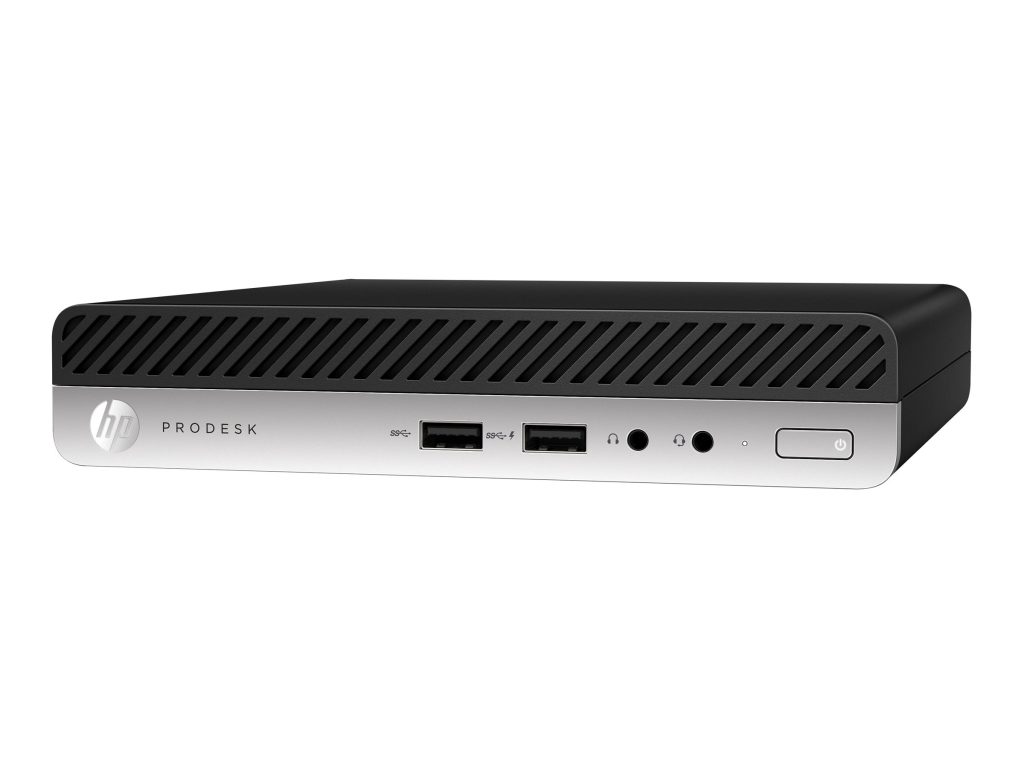
HP ProDesk 400 G5 Desktop Mini • Front I/O & Dual DisplayPort Rear Connectivity
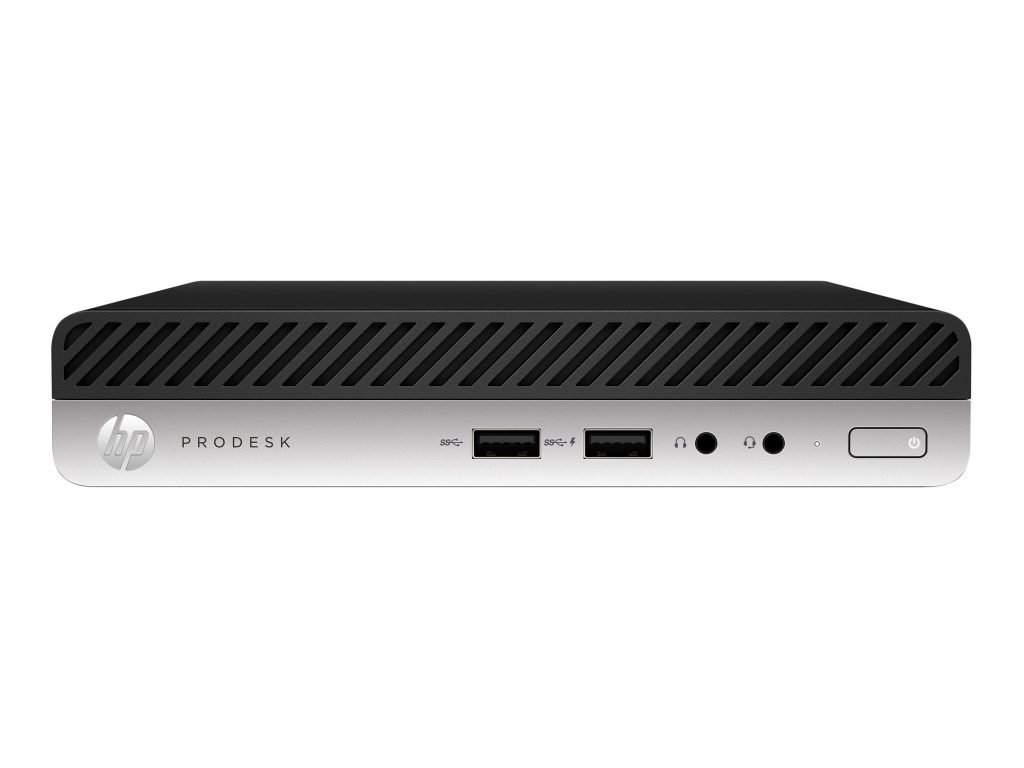
Internal 1-Liter Chassis Architecture • 2.5″ SSD Caddy & Centrifugal Blower Assembly
HP 859C Mandolin-R Motherboard • Dual DDR4 SODIMM Slots & M.2 2280 NVMe Interface
PassMark PerformanceTest V11 Baseline Verification
| Benchmark Baseline | Overall PassMark Rating | CPU Mark | 2D Graphics | 3D Graphics | Memory Mark | Disk Mark |
|---|---|---|---|---|---|---|
| Baseline #366686410746 (Optimized) | 1,516 | 6,109 | 345 | 1,174 | 2,730 | 3,175 (Vi560 SSD) |
| Baseline #366675306005 (Initial) | 1,173 | 4,106 | 312 | 861 | 2,318 | 2,963 |