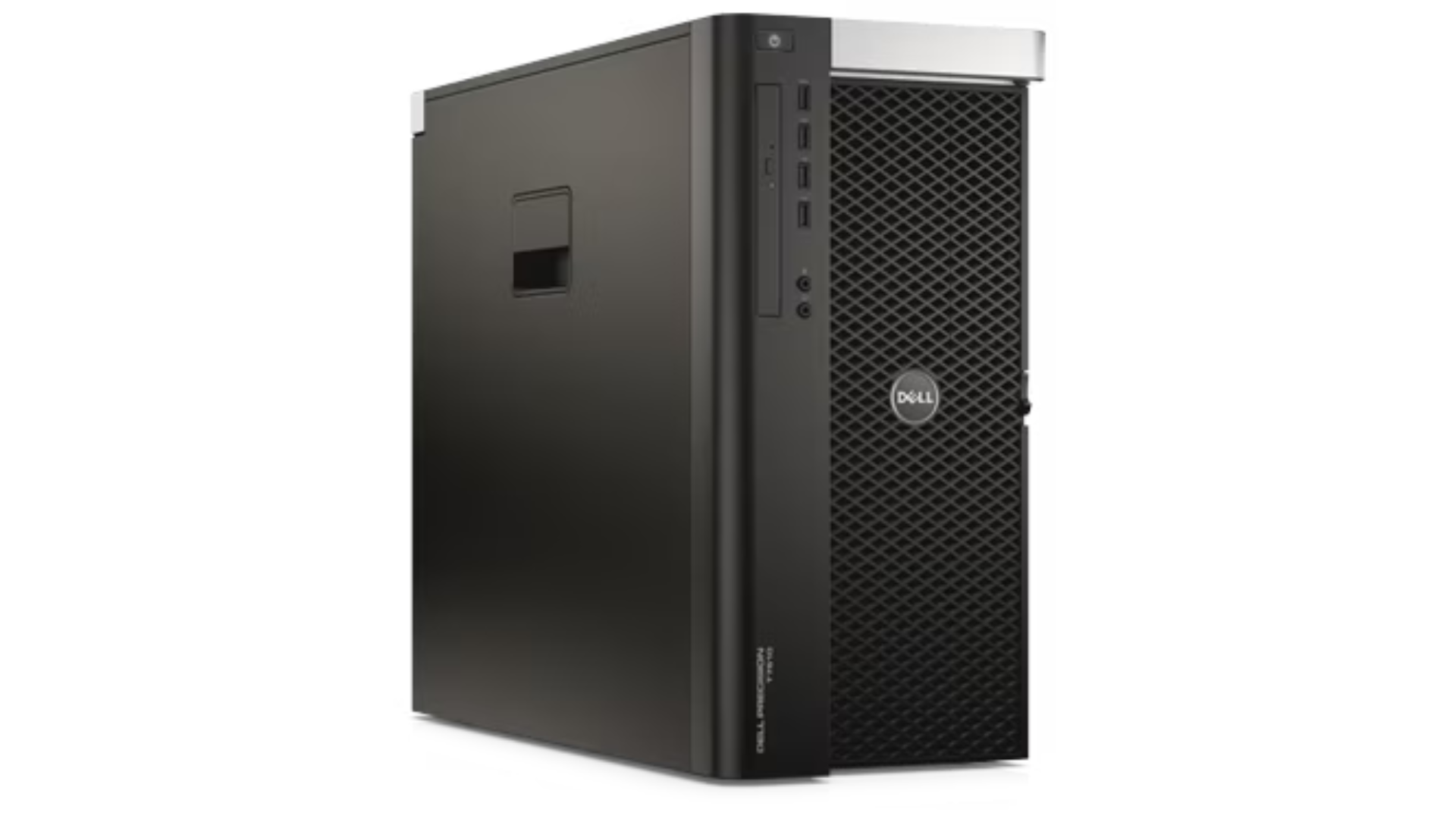
Dell Precision T7610 Workstation – Hardware Telemetry & Diagnostic Report
•
Target Host:
precision-7610 (Dell Precision 7610 • Service Tag: 4PYLJ32)•
Site: CZ-BRN-NEU (Brno Lab)
•
Verification Date: September 22, 2026
1. System Summary & Computer Overview
| Category | Property | Value |
|---|---|---|
| Computer | Computer Type | ACPI x64-based Multi-Processor Enterprise Workstation |
| Hostname / Role | precision-7610 (High-Performance Compute & Virtualization Host) |
|
| System Vendor | Dell Inc. | |
| Product Model | Precision T7610 (Precision 7610 Series • Service Tag: 4PYLJ32) |
|
| Chassis Form Factor | Rackable Full-Tower (5U Rackmount Capable with ReadyRails) | |
| Motherboard | Dell Workstation System Board (Part: 0NK70N Rev A04 / Intel C602) |
|
| Operating System | Deployment State | Active Production Host (Ubuntu 22.04.5 LTS, Linux Kernel 6.8.0-138-generic) |
| Architecture | 64-bit (x86_64, Little-Endian) | |
| Target Workload Stack | Proxmox VE 8.x / Debian GNU/Linux 13 / Ubuntu 22.04 LTS / Virtualization | |
| Boot Capability | UEFI 2.3.1 with Secure Boot support & Legacy BIOS Fallback | |
| Processors | CPU Sockets | 2 x Socket R (LGA 2011 / FCLGA2011) |
| Processor Models | 2 x Intel(R) Xeon(R) CPU E5-2637 v2 @ 3.50GHz (Exhibit #2969) | |
| Core / Thread Count | 8 Physical Cores / 16 Threads total (4 cores / 8 threads per socket) | |
| Microarchitecture | Ivy Bridge-EP (22 nm, Stepping 4 / M1, S-Spec SR1B7) |
|
| PassMark Benchmark | 6,483 Multi-Thread Mark (Single-Thread: 1,939 MOps/Sec) | |
| Memory | Physical Installed RAM | 256.0 GB (16 x 16 GB Samsung Registered ECC RDIMMs • Exhibit #3103) |
| Module Specification | Samsung M393B2G70DB0-YK0 (D-die) & M393B2G70BH0-YK0 (B-die) (Dual-Rank 2Rx4, PC3L-12800R, CL11, 1.35V/1.5V) |
|
| Memory Architecture | Dual-Socket Quad-Channel Architecture (16 DIMM slots fully populated, 8 slots per CPU, 1600 MT/s) | |
| Maximum Capacity | 256 GB installed (platform supports up to 512 GB with 32 GB LRDIMMs) | |
| Graphics | Primary Accelerator | HP NVIDIA Quadro K4000 (3 GB GDDR5, 192-bit Bus, PCIe 2.0 x16 • Exhibit #3105) |
| GPU Architecture | Kepler (GK106GL, 768 CUDA Cores @ 810 MHz, 134.4 GB/s Bandwidth) | |
| Display Connectors | 2 x DisplayPort 1.2, 1 x Dual-Link DVI-I (Max Resolution: 3840 × 2160 @ 60Hz) | |
| Storage | Primary SSD | Micron 5210 ION Enterprise SSD (1.92 TB SATA 6Gb/s • Exhibit #3033, S/N 195225C5487B, 968.3 TBW, 56% health) |
| Primary Controller | Integrated LSI SAS 2308 6Gb/s (8 SAS/SATA ports via 2x SFF-8087 mini-SAS) | |
| Secondary Controller | Intel C602 AHCI SATA 3.0 6Gb/s (Optical drive MATSHITA DVD+/-RW UJ8E0 on SATA0) |
|
| Drive Bays | 4 x 3.5″/2.5″ internal quick-release bays + 1 x 5.25″ flex bay + slimline ODD bay | |
| Networking | Primary Ethernet | Intel 82579LM Gigabit Network Connection (10/100/1000 Mbps, Intel vPro / AMT, active at 192.168.111.106/24) |
| Secondary Ethernet | Intel I210 Gigabit Network Connection (10/100/1000 Mbps, PCIe controller, Standby) | |
| Wireless Adapter | Intel Wi-Fi 6 AX200 (802.11ax 2×2 MU-MIMO 160MHz up to 2.4 Gbps, Bluetooth 5.2, PCIe x1 desktop carrier) |
2. Motherboard & Chipset Architecture
Motherboard Properties
- Manufacturer: Dell Inc.
- Board Model: Precision Workstation T7610 (Part:
0NK70NRevA04) - Chassis Service Tag:
4PYLJ32 - Sockets: Dual Socket R (LGA 2011 / FCLGA2011)
- Form Factor: Proprietary Dell Rackable Tower / 5U SSI EEB class
- Chassis Engineering: Heavy-gauge cold-rolled aluminum chassis with integrated front/rear cast metal carrying handles and lockable tool-free side panel.
BIOS & Firmware
- Vendor: Dell Inc. / American Megatrends Inc. (AMI)
- Revision: Version A17 (Release Date: 07/09/2018)
- ROM Capacity: 8 MB + 4 MB Serial Flash EEPROM (12 MB total SPI NVRAM)
- Firmware Standards: UEFI 2.3.1, SMBIOS 2.7, ACPI 5.0, PXE 2.1 Boot
- Hardware Features: Dell Reliable Memory Technology (RMT), Intel Trusted Execution Technology (TXT), Intel VT-x and VT-d Directed I/O Virtualization.
Chipset & Bus Architecture
- Platform Controller Hub: Intel C602 Express Chipset (Patsburg PCH, 65 nm, 12W TDP)
- Interconnect Fabric: Dual QuickPath Interconnect (QPI) links operating at 8.00 GT/s (32.0 GB/s bi-directional per link) between CPU0 and CPU1.
- Direct Media Interface: DMI 2.0 (4 lanes @ 5.0 GT/s, 20 Gb/s total bandwidth) linking CPU1 to the Intel C602 PCH.
- PCIe Lane Infrastructure: 40 PCI Express 3.0 lanes direct from each CPU socket, providing 80 PCIe lanes total for expansion slots and onboard controllers.
Power Delivery & Regulation
- Power Supply Unit: Dell 1300W High-Efficiency Modular Power Supply (80 PLUS Gold certified)
- Voltage Scaling: 1300W output at 181-240 VAC; 1100W output at 108-180 VAC; 1000W output at 100-107 VAC.
- Tool-Free Servicing: Rear external blind-mate pull handle allowing instant tool-free slide-out PSU replacement.
- GPU Auxiliary Power: Dedicated PCIe power harness supporting up to 600W total graphics draw (up to four 150W single-slot or two 300W dual-slot accelerators).
3. Processors (Dual Intel Xeon E5-2637 v2)
| CPU Specification | CPU Socket #0 (CPU 1) | CPU Socket #1 (CPU 2) |
|---|---|---|
| Model Name | Intel(R) Xeon(R) CPU E5-2637 v2 @ 3.50GHz | Intel(R) Xeon(R) CPU E5-2637 v2 @ 3.50GHz |
| Architecture & Lithography | Ivy Bridge-EP (22 nm 3D Tri-Gate Transistors) | Ivy Bridge-EP (22 nm 3D Tri-Gate Transistors) |
| Socket & Stepping | Socket R (LGA 2011) / Stepping 4 (M1, Family 6, Model 62) | Socket R (LGA 2011) / Stepping 4 (M1, Family 6, Model 62) |
| Production S-Spec Code | SR1B7 (Verified Museum Physical Inventory) |
SR1B7 (Verified Museum Physical Inventory) |
| Physical Cores / Threads | 4 Cores / 8 Threads (Intel Hyper-Threading) | 4 Cores / 8 Threads (Intel Hyper-Threading) |
| Base & Turbo Frequencies | 3.50 GHz Base / 3.80 GHz Max Turbo | 3.50 GHz Base / 3.80 GHz Max Turbo |
| Operating Thermals | +41.0°C Package (33°C – 41°C Core) | +42.0°C Package (37°C – 42°C Core) |
| Thermal Design Power (TDP) | 130 W (High-Frequency Workstation Profile) | 130 W (High-Frequency Workstation Profile) |
| QPI Interconnect Links | Dual 8.00 GT/s QPI Links (Coherent Interconnect) | Dual 8.00 GT/s QPI Links (Coherent Interconnect) |
| NUMA Node Association | Node 0 (CPUs 0, 1, 2, 3, 8, 9, 10, 11) | Node 1 (CPUs 4, 5, 6, 7, 12, 13, 14, 15) |
Cache Hierarchy
| Cache Level | Type | Per-Core / Per-Socket | Total Aggregate | Associativity & Line Size |
|---|---|---|---|---|
| L1 Data | Data (L1d) | 32 KiB per core | 256 KiB (8 instances across 8 cores) | 8-way set associative, 64-byte line size |
| L1 Instruction | Instruction (L1i) | 32 KiB per core | 256 KiB (8 instances across 8 cores) | 4-way set associative, 64-byte line size |
| L2 Unified | Dedicated (L2) | 256 KiB per core | 2,048 KiB (2 MiB) | 8-way set associative, 64-byte line size |
| L3 Shared | Intel Smart Cache (L3) | 15,360 KiB (15 MiB) per socket | 30,720 KiB (30 MiB) | 16-way set associative, non-inclusive ring cache |
Hardware Vulnerability & Mitigation Status
| Vulnerability | Kernel Status | Mitigation Details |
|---|---|---|
| Meltdown (CVE-2017-5754) | Mitigated | Kernel Page Table Isolation (KPTI) fully active |
| Spectre v1 (CVE-2017-5753) | Mitigated | usercopy/swapgs barriers and __user pointer sanitization |
| Spectre v2 (CVE-2017-5715) | Mitigated | Retpolines, conditional Indirect Branch Prediction Barrier (IBPB), IBRS_FW, RSB filling |
| Speculative Store Bypass (v4) | Mitigated | Speculative Store Bypass Disable (SSBD) enforced via prctl |
| L1TF Foreshadow (CVE-2018-3615) | Mitigated | PTE Inversion, VMX L1D cache flushing on guest entry |
| MDS (CVE-2019-11091) | Mitigated | Microcode buffer clearing (MD_CLEAR) active |
| Retbleed / SRBDS / Downfall (GDS) | Not affected | Ivy Bridge-EP microarchitecture lacks vulnerable gathering structures / not susceptible |
4. Memory (RAM) & NUMA Subsystem
DIMM Technology & Speed
DDR3-1600
1,600 MT/s • Dual-Rank (2Rx4) • 102.4 GB/s theoretical per socket
Platform Population
16 / 16 Slots
100% Populated (Expandable to 512 GB with 32 GB LRDIMMs)
NUMA & Channel Physical Layout Map
+-----------------------------------------------------------------------------------------------+
|                             DELL PRECISION T7610 SYSTEM BOARD (0NK70N)                        |
|                                                                                               |
|  [ CPU Socket #0: NUMA Node 0 ]                     [ CPU Socket #1: NUMA Node 1 ]            |
|   Memory Controller #0: 128 GiB                      Memory Controller #1: 128 GiB            |
|   (4 Channels x 2 Slots = 8 DIMM Slots)              (4 Channels x 2 Slots = 8 DIMM Slots)    |
|                                                                                               |
|   - Channel 0:                                       - Channel 0:                             |
|     * Slot DIMM 1 (White): [ 16GB Samsung DB0 2Rx4]    * Slot DIMM 1 (White): [ 16GB Samsung BH0 2Rx4]|
|     * Slot DIMM 2 (Black): [ 16GB Samsung BH0 2Rx4]    * Slot DIMM 2 (Black): [ 16GB Samsung BH0 2Rx4]|
|   - Channel 1:                                       - Channel 1:                             |
|     * Slot DIMM 3 (White): [ 16GB Samsung DB0 2Rx4]    * Slot DIMM 3 (White): [ 16GB Samsung BH0 2Rx4]|
|     * Slot DIMM 4 (Black): [ 16GB Samsung BH0 2Rx4]    * Slot DIMM 4 (Black): [ 16GB Samsung DB0 2Rx4]|
|   - Channel 2:                                       - Channel 2:                             |
|     * Slot DIMM 5 (White): [ 16GB Samsung DB0 2Rx4]    * Slot DIMM 5 (White): [ 16GB Samsung DB0 2Rx4]|
|     * Slot DIMM 6 (Black): [ 16GB Samsung BH0 2Rx4]    * Slot DIMM 6 (Black): [ 16GB Samsung BH0 2Rx4]|
|   - Channel 3:                                       - Channel 3:                             |
|     * Slot DIMM 7 (White): [ 16GB Samsung DB0 2Rx4]    * Slot DIMM 7 (White): [ 16GB Samsung DB0 2Rx4]|
|     * Slot DIMM 8 (Black): [ 16GB Samsung BH0 2Rx4]    * Slot DIMM 8 (Black): [ 16GB Samsung DB0 2Rx4]|
|                                                                                               |
|   Subtotal Node 0: 8 x 16 GB = 128 GB                Subtotal Node 1: 8 x 16 GB = 128 GB      |
+-----------------------------------------------------------------------------------------------+
|             TOTAL SYSTEM PHYSICAL MEMORY: 256.0 GB (16 SLOTS FULLY POPULATED • 1600 MT/s)          |
+-----------------------------------------------------------------------------------------------+
Physical DIMM Slot Inventory (All 16 Slots Populated)
| Slot # | Locator | Installed Module Part | Manufacturer | Serial Number | Capacity | Type & Rank | Speed & Voltage | Status |
|---|---|---|---|---|---|---|---|---|
| 1 | DIMM1_CPU1 |
M393B2G70DB0-YK0 |
Samsung | 4150C9AB |
16 GB | Registered ECC 2Rx4 | 1600 MT/s / 1.35V | Active (Node 0) |
| 2 | DIMM5_CPU1 |
M393B2G70DB0-YK0 |
Samsung | 4150AD49 |
16 GB | Registered ECC 2Rx4 | 1600 MT/s / 1.35V | Active (Node 0) |
| 3 | DIMM3_CPU1 |
M393B2G70DB0-YK0 |
Samsung | 4150AF40 |
16 GB | Registered ECC 2Rx4 | 1600 MT/s / 1.35V | Active (Node 0) |
| 4 | DIMM7_CPU1 |
M393B2G70DB0-YK0 |
Samsung | 4150AD48 |
16 GB | Registered ECC 2Rx4 | 1600 MT/s / 1.35V | Active (Node 0) |
| 5 | DIMM2_CPU1 |
M393B2G70BH0-YK0 |
Samsung | 3642021F |
16 GB | Registered ECC 2Rx4 | 1600 MT/s / 1.35V | Active (Node 0) |
| 6 | DIMM6_CPU1 |
M393B2G70BH0-YK0 |
Samsung | 364200B8 |
16 GB | Registered ECC 2Rx4 | 1600 MT/s / 1.35V | Active (Node 0) |
| 7 | DIMM4_CPU1 |
M393B2G70BH0-YK0 |
Samsung | 364203EC |
16 GB | Registered ECC 2Rx4 | 1600 MT/s / 1.35V | Active (Node 0) |
| 8 | DIMM8_CPU1 |
M393B2G70BH0-YK0 |
Samsung | 3642021E |
16 GB | Registered ECC 2Rx4 | 1600 MT/s / 1.35V | Active (Node 0) |
| 9 | DIMM1_CPU2 |
M393B2G70BH0-YK0 |
Samsung | 364203D3 |
16 GB | Registered ECC 2Rx4 | 1600 MT/s / 1.35V | Active (Node 1) |
| 10 | DIMM5_CPU2 |
M393B2G70DB0-YK0 |
Samsung | 4150AF8D |
16 GB | Registered ECC 2Rx4 | 1600 MT/s / 1.35V | Active (Node 1) |
| 11 | DIMM3_CPU2 |
M393B2G70BH0-YK0 |
Samsung | 364203AC |
16 GB | Registered ECC 2Rx4 | 1600 MT/s / 1.35V | Active (Node 1) |
| 12 | DIMM7_CPU2 |
M393B2G70DB0-YK0 |
Samsung | 4150AF8E |
16 GB | Registered ECC 2Rx4 | 1600 MT/s / 1.35V | Active (Node 1) |
| 13 | DIMM2_CPU2 |
M393B2G70BH0-YK0 |
Samsung | 3642011B |
16 GB | Registered ECC 2Rx4 | 1600 MT/s / 1.35V | Active (Node 1) |
| 14 | DIMM6_CPU2 |
M393B2G70BH0-YK0 |
Samsung | 36420341 |
16 GB | Registered ECC 2Rx4 | 1600 MT/s / 1.35V | Active (Node 1) |
| 15 | DIMM4_CPU2 |
M393B2G70DB0-YK0 |
Samsung | 4150AF8B |
16 GB | Registered ECC 2Rx4 | 1600 MT/s / 1.35V | Active (Node 1) |
| 16 | DIMM8_CPU2 |
M393B2G70DB0-YK0 |
Samsung | 4150AF91 |
16 GB | Registered ECC 2Rx4 | 1600 MT/s / 1.35V | Active (Node 1) |
5. Graphics & Display Adapters
Primary Accelerator: HP NVIDIA Quadro K4000 3 GB (Exhibit #3105)
The primary graphics subsystem is powered by a genuine enterprise HP OEM NVIDIA Quadro K4000 (HP Spare 713381-001 / Assy 700104-001, vBIOS 80.06.76.00.07). The workstation previously hosted a consumer Gigabyte GeForce GTS 250 (Exhibit #2975) during early barebone testing, which has now transitioned to the museum graphics collection.
| GPU Architecture | Kepler (GK106GL / 28 nm, Revision A1) |
| CUDA Cores / Shaders | 768 CUDA Cores (4 SMX units @ 810 MHz) |
| Core Engine Clock | 810 MHz |
| Video Memory (VRAM) | 3,072 MiB (3 GB) GDDR5 (192-bit Memory Bus) |
| Memory Bandwidth | 1,404 MHz (5,616 MT/s Effective) • 134.4 GB/s Peak Memory Bandwidth |
| PassMark G3D Mark | 2,718 G3D Mark (Rank 7 in museum GPU Collection) |
| Host Bus Location | PCIe 2.0 x16 negotiated (PCIe 3.0 capable) at Bus 03:00.0 (Root Port 00:02.0, CPU1) |
| Hardware Identifiers | PCI ID 10de:11fa • Subsystem HP 103c:079c • HP Spare 713381-001 • Assy 700104-001 |
| Serial Numbers & Firmware | Board S/N: 0322314010635 • HP S/N: CN42404748 • vBIOS: 80.06.76.00.07 |
| Thermal & Power Draw | 80 W Max TDP (Single 6-pin PCIe) • Verified Idle: +44.0°C, 2100 RPM, 20.08 W |
| Physical Display Outputs | 2 x DisplayPort 1.2, 1 x Dual-Link DVI-I (Single-slot bracket) |
| Maximum Resolution | 3840 × 2160 @ 60Hz (DisplayPort 1.2) • 2560 × 1600 (Dual-Link DVI) |
6. Storage Subsystem & Drive Inventory
+-------------------------------------------------------------------------------------------------------+
|                                    PHYSICAL DISK & ARRAY TOPOLOGY                                     |
|                                                                                                       |
|  [ INTEGRATED LSI SAS 2308 CONTROLLER (PCIe 3.0 x8 at Bus 01:00.0) ]                                  |
|   +-- SAS Port 0 (Mini-SAS SFF-8087 Port 0) -> Internal Drive Bay 0: [ MICRON 5210 ION 1.92TB SSD ]    |
|   +-- SAS Port 1 (Mini-SAS SFF-8087 Port 0) -> Internal Drive Bay 1: [ UNPOPULATED / READY ]           |
|   +-- SAS Port 2 (Mini-SAS SFF-8087 Port 0) -> Internal Drive Bay 2: [ UNPOPULATED / READY ]           |
|   +-- SAS Port 3 (Mini-SAS SFF-8087 Port 0) -> Internal Drive Bay 3: [ UNPOPULATED / READY ]           |
|   `-- SAS Port 4-7 (Mini-SAS SFF-8087 Port 1) -> External Flex-Bay (Optional 4x 2.5" SAS/SATA Caddy) |
|                                                                                                       |
|  [ INTEGRATED INTEL C602 AHCI CONTROLLER (6 Gbps SATA at Bus 00:1f.2) ]                               |
|   +-- SATA0 Connector -----------------------> Slimline Optical Bay: [ MATSHITA DVD+/-RW UJ8E0 ]      |
|   `-- SATA1 Connector -----------------------> 5.25" Device Bay [ UNPOPULATED / READY ]               |
+-------------------------------------------------------------------------------------------------------+| Bay Location | Controller Routing | Physical Form Factor | Interface Speed | Installed Device | Telemetry / Health |
|---|---|---|---|---|---|
| Internal Bay 0 | LSI SAS 2308 (SAS0, Port 0) | 2.5″ in Tool-Free Caddy | SATA 3.2 6.0 Gb/s | Micron 5210 ION 1.92TB SSD (Exhibit #3033 • /dev/sda) |
PASSED (56% Health, 968.3 TBW, 35,803 POH, +32°C) |
| Internal Bay 1 | LSI SAS 2308 (SAS0, Port 1) | 3.5″ / 2.5″ Tool-Free Caddy | 6 Gbps SAS 2.0 / SATA 3.0 | Unpopulated | Ready for Storage Array |
| Internal Bay 2 | LSI SAS 2308 (SAS0, Port 2) | 3.5″ / 2.5″ Tool-Free Caddy | 6 Gbps SAS 2.0 / SATA 3.0 | Unpopulated | Ready for Storage Array |
| Internal Bay 3 | LSI SAS 2308 (SAS0, Port 3) | 3.5″ / 2.5″ Tool-Free Caddy | 6 Gbps SAS 2.0 / SATA 3.0 | Unpopulated | Ready for Storage Array |
| Flex-Bay 4 | LSI SAS 2308 (SAS1) / SATA1 | 5.25″ Half-Height Bay | 6 Gbps SAS / SATA | Unpopulated | Available Expansion Bay |
| Optical Bay | Intel C602 (SATA0) | Slimline Optical Disc Drive | 1.5 Gbps AHCI SATA | MATSHITA DVD+/-RW UJ8E0 (/dev/sr0) |
Active / Ready |
7. Network Adapters & Connectivity
| Interface | Hardware Controller | Bus Attachment | Link Speeds / Specs | Enterprise Capabilities | Status |
|---|---|---|---|---|---|
LAN 1 (enp0s25) |
Intel 82579LM Gigabit PHY (Lewisville) | Intel C602 Integrated MAC (PCIe 00:19.0) |
10 / 100 / 1000 Mbit/s (Auto MDI-X) | Intel AMT / vPro, Wake-on-LAN, PXE 2.1 Boot | UP (192.168.111.106) |
LAN 2 (enp7s0) |
Intel I210 Gigabit PCIe Controller [8086:1533] |
Dedicated PCIe 1.1 x1 Bus (07:00.0) |
10 / 100 / 1000 Mbit/s (Auto MDI-X) | MSI-X Multi-Queue, RSS, Jumbo Frames (9k), Wake-on-LAN | Standby (No Carrier) |
WLAN 1 (wlp129s0) |
Intel Wi-Fi 6 AX200 Adapter [8086:2723] |
PCIe 1.1 x1 (Bus 81:00.0, CPU 2 Root Port) |
802.11ax (Wi-Fi 6), 2×2 MU-MIMO 160MHz (2.4 Gbps) | Bluetooth 5.2, WPA3-Personal/Enterprise, iwlwifi |
Active Adapter |
8. Thermal Telemetry, Sensors & Fan Subsystem
CPU Heatsinks
+41°C / +42°C
Dual PWM Fans: 990 / 999 RPM
Hard Drive Cooling
+32°C SSD
Direct chassis airflow across Bay 0
GPU Accelerator
+44°C Quadro
Fan: 2100 RPM • 20.08 W Idle Draw
Power Supply Zone
Isolated Tunnel
1300W Gold floor exhaust duct
Acoustic & Airflow Management
The Dell Precision T7610 utilizes a segregated dual-chamber thermal partition. The processor and memory array reside in an isolated top tunnel equipped with clear molded airflow baffles. A separate middle chamber directs positive pressure over the four full-length PCIe x16 graphics slots, while the 1300W modular power supply breathes through an independent floor-level intake duct.
- Thermal Fan Control: Closed-loop BIOS PID orchestration responding dynamically to CPU digital thermal sensors (PECI) and motherboard ambient thermistors (+23°C inlet / +43°C exhaust).
- Acoustic Profile: Ultra-quiet idle profile tuned for creative studio environments; scales progressively under compute stress.
9. Operating System & Workload Readiness
Compute & Virtualization Roles
- Virtualization Host: Proxmox VE 8.x / Debian 13 hypervisor cluster node with hardware Intel VT-x and VT-d PCI passthrough.
- SMP Compute Node: 8 high-frequency Ivy Bridge cores (3.50 GHz base / 3.80 GHz turbo) with 30 MB L3 cache for compiling, emulation, and batch parallel simulation.
- Lab Infrastructure: High-bandwidth Intel Gigabit controllers and Wi-Fi 6 AX200 for VLAN segregation, NFS storage transport, and homelab services.
Acceleration & Expansion Potential
- Workstation Graphics: Dedicated HP NVIDIA Quadro K4000 (3 GB GDDR5, 768 CUDA cores) providing workstation OpenGL/DirectX acceleration and CUDA compute.
- Massive Memory Footprint: 256.0 GB DDR3-1600 Registered ECC memory across 16 populated DIMMs delivering 102.4 GB/s theoretical bandwidth per socket.
- Enterprise Storage: Integrated LSI 2308 6Gb/s SAS/SATA controller with Micron 5210 ION enterprise SSD (968.3 TBW, 56% health) and 3 available hot-swap bays.
10. Diagnostic Health & Operational Assessment
- Processor Subsystem Health: Both Intel Xeon E5-2637 v2 processors (verified production S-Spec
SR1B7, M1 stepping • Exhibit #2969) operate in dual-socket symmetric multiprocessing configuration, delivering 8 physical cores and 16 threads at 3.50 GHz base / 3.80 GHz turbo with 30 MB aggregate L3 cache and dual 8.0 GT/s QPI links in full operational order at +41.0°C / +42.0°C thermals. - Memory Architecture & NUMA Balance: The 256.0 GB Samsung Registered ECC memory subsystem (Exhibit #3103) is 100% populated across all 16 slots with 8x
M393B2G70DB0-YK0(D-die) and 8xM393B2G70BH0-YK0(B-die) modules, delivering a balanced 128 GB per NUMA node at full 1600 MT/s quad-channel bandwidth backed by Dell Reliable Memory Technology (RMT). - Graphics & Compute Acceleration: Dedicated HP NVIDIA Quadro K4000 3 GB graphics accelerator (768 CUDA cores, 3 GB GDDR5, 192-bit bus, 2,718 G3D Mark • Exhibit #3105) provides workstation multi-display output (2x DP 1.2, 1x DVI-I) and CUDA acceleration, replacing the former test GTS 250 with full enterprise driver support.
- Storage & Connectivity Infrastructure: The primary storage volume is anchored by a high-end Micron 5210 ION 1.92 TB SSD (Exhibit #3033) via integrated LSI SAS 2308 6Gb/s controller (35,803 POH, 968.3 TBW, 56% health remaining), complemented by dual Gigabit Intel Ethernet (82579LM + I210) and an Intel Wi-Fi 6 AX200 wireless adapter.